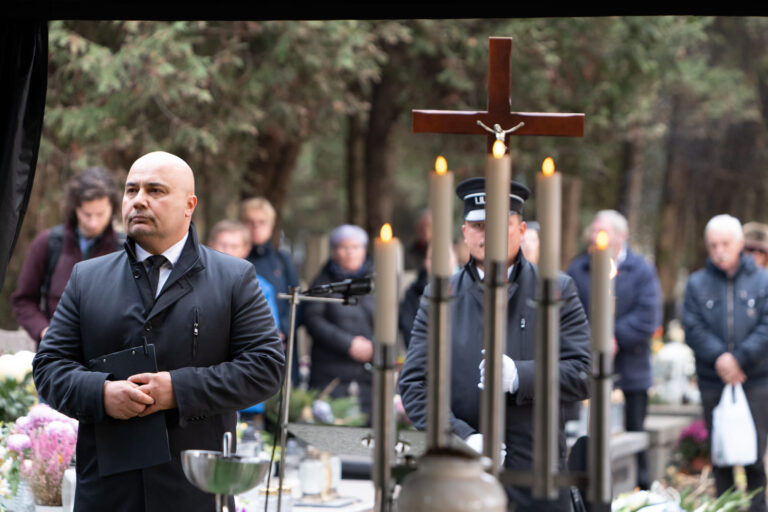

Urn funeral in Kraków step by step
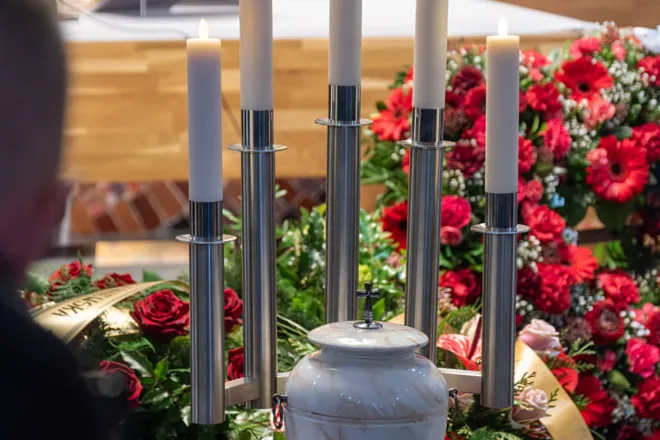
An urn funeral begins with the medical certificate of death and the registration of the death at the Register Office (Urząd Stanu Cywilnego), followed by cremation and the burial of the urn in a cemetery. In Kraków an urn can be placed in an earth grave, in a masonry grave or in an urn niche in a columbarium. According to the Municipal Cemeteries Authority in Kraków (Zarząd Cmentarzy Komunalnych), under the current rules ashes are buried in a cemetery, not scattered or kept at home.
- Medical certificate of deathissued by a doctor or hospital
- Death certificatereported at the Register Office within 3 days of the medical certificate being issued
- Farewellat the coffin before cremation, or with the urn
- Cremationthe ashes are placed in the chosen urn
- Burial of the urna grave or a niche in a columbarium
First formalities: the medical certificate of death and the death certificate
The formalities before an urn funeral are the same as before a traditional funeral. First a doctor confirms the death and issues the medical certificate of death. The certificate may also be issued by a hospital or a forensic medicine institute.
You take the medical certificate of death to the Register Office (Urząd Stanu Cywilnego). The death must be reported within 3 days of the certificate being issued (within 24 hours in the case of an infectious disease). In Kraków this can be done at any branch of the Register Office.
To report the death you need:
- the medical certificate of death,
- the identity card or passport of the deceased and their military service book, if the family has them,
- the identity card or passport of the person reporting the death.
There is no official fee for reporting the death itself. The office draws up the death certificate on the day of the report and issues an abridged copy of the death certificate and the part of the medical certificate of death intended for the cemetery administration. You must keep that part, because without it the cemetery will not accept the burial. We describe this in detail in the guide on what to do when someone dies.
Who decides on cremation and burial
The right to bury the deceased belongs to the closest family:
- the spouse,
- children, grandchildren and further descendants,
- parents, grandparents and further ancestors,
- collateral relatives up to the 4th degree of kinship, for example siblings,
- relatives by marriage in the direct line up to the 1st degree, that is parents-in-law, son-in-law and daughter-in-law.
A burial may also be arranged by a person who voluntarily undertakes to do so. The rules on the burial of remains apply accordingly to the burial of ashes, so the same rules apply to an urn funeral.
If the family does not agree about cremation, it is best to settle this before the order is signed. The funeral home can handle the formalities on the family's behalf on the basis of their authorisation, and Lilia helps prepare the necessary documents.
Farewell before cremation or with the urn
The family can choose one of two ways:
- a farewell at the coffin before cremation, for example in a farewell hall or in a church, followed by the burial of the urn at a separate time,
- a farewell with the urn after cremation, combined with placing it in a grave or niche.
The first way gives loved ones the chance to see the deceased one last time. The second allows a single ceremony to be held at the cemetery. Both can be religious or secular. A secular ceremony can be led by a funeral celebrant; you can read more on the page about a secular funeral.
You will find information about a farewell in a hall in the section on the farewell hall, and about cremation itself on the page about cremation in Kraków.
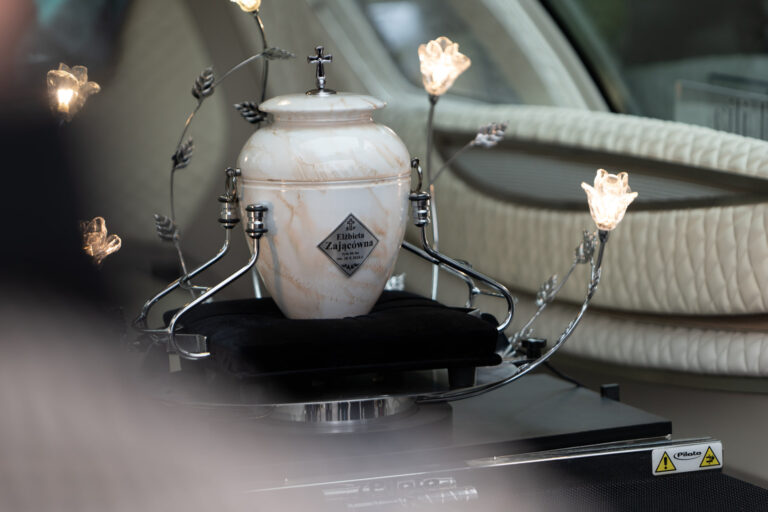
Choosing an urn
The urn is chosen before cremation, because the ashes are placed in it. A few questions help with the choice:
- where the urn will be buried: in an earth grave, in a masonry grave or in a columbarium niche,
- whether the size of the urn will fit in the niche or in a grave that already holds other burials,
- what material it should be made of and whether it should match the existing gravestone.
For an urn niche the size matters particularly, so it is best to confirm it with the cemetery office. Sample urns are shown on the page about coffins and funeral urns.
Where to bury an urn in Kraków
In Kraków's municipal cemeteries an urn can be buried in:
- in an existing earth or masonry grave,
- in an urn grave, earth or masonry,
- in an urn niche in a columbarium.
An urn can be placed in an existing grave or niche if there is space and the grave holders give their consent. Consent is not needed if the deceased was the grave holder or had been granted the right to be buried there. Where there are several grave holders, each of them must give consent.
If the family has no grave, the Municipal Cemeteries Authority (Zarząd Cmentarzy Komunalnych) may allocate a new place:
- Rakowicki Cemetery: an urn niche in the columbarium or a plot for a masonry urn grave, for an urn buried directly after death, for a person who was registered as resident and lived in Kraków for at least 5 years before death, and where neither that person nor their spouse, parents or children hold the right to a grave or niche in Kraków's municipal cemeteries,
- Prądnik Czerwony Cemetery: the main cemetery accepting the ashes of Kraków residents who have no grave or niche of their own,
- Grębałów, Prokocim and Mydlniki: these also have columbarium walls with urn niches, usually allocated according to the last place of residence.
We have gathered information about funerals at Rakowice in the article Rakowicki Cemetery: funerals.
- Earth gravean existing family grave or a new urn grave
- Masonry gravean existing grave or a new masonry urn grave
- Columbarium nicheincluding Rakowice, Grębałów, Prokocim, Mydlniki
Documents for the cemetery and the day of burial
To bury an urn in a municipal cemetery in Kraków, you need:
- the part of the medical certificate of death meant for the cemetery administration, with the Register Office (USC) note that the death has been registered,
- the cremation certificate,
- the consent of the grave or niche holder, if the urn is going into an existing place.
Consent to the burial can be sent by email, fax or ePUAP, and the date of the funeral can be agreed by telephone. The funeral home can deliver the original documents, no later than the day before the burial. For a funeral on Monday, this must be done on Friday.
For help in setting the date and preparing the documents, please call the Lilia office on +48 12 421 24 80. The funeral emergency line answers the phone around the clock: +48 507 111 211.
What must not be done with ashes
Polish law allows ashes to be kept in earth graves, masonry graves and columbaria. Such graves and columbaria may be located only in cemeteries.
The Municipal Cemeteries Authority in Kraków (Zarząd Cmentarzy Komunalnych) states plainly that under the current regulations:
- ashes may not be scattered,
- an urn may not be left at home,
- it may not be placed in a garden or on private property.
The urn must therefore go to a cemetery. For the cost of an entire urn funeral, please ask by phone on +48 12 421 24 80. You can read more about what the price depends on on the page how much a funeral in Kraków costs.
Ashes may not be scattered, and an urn may not be left at home, in a garden or on private property. The urn must go to a cemetery.
Frequently asked questions
Can an urn with ashes be kept at home?
No. Ashes are buried in a cemetery, in an earth grave, a masonry grave or a columbarium niche. The Municipal Cemeteries Authority in Kraków states that an urn may not be left at home, in a garden or on private property.
Can an urn be buried in a grave where a family member already lies?
Yes, if there is space in the grave and the grave holders give their consent. Consent is not needed if the deceased was the grave holder or had been granted the right to be buried in that grave. Where there are several grave holders, each of them must give consent.
Do Kraków's municipal cemeteries have columbaria?
Yes. Urn niches in a columbarium are available at Rakowicki Cemetery, and columbarium walls also at the Grębałów, Prokocim and Mydlniki cemeteries. The Municipal Cemeteries Authority decides the conditions of allocation.
What documents are needed to bury an urn?
The part of the medical certificate of death for the cemetery administration with the note of the Register Office (Urząd Stanu Cywilnego), and the cremation certificate. When the urn goes into an existing grave, the consent of its holder is also needed.
Does the farewell have to take place at the urn?
No. The family can say goodbye at the coffin before the cremation and bury the urn later, or arrange a single ceremony with the urn at the cemetery.